DCAS Paramedic Trauma Assessment Questions
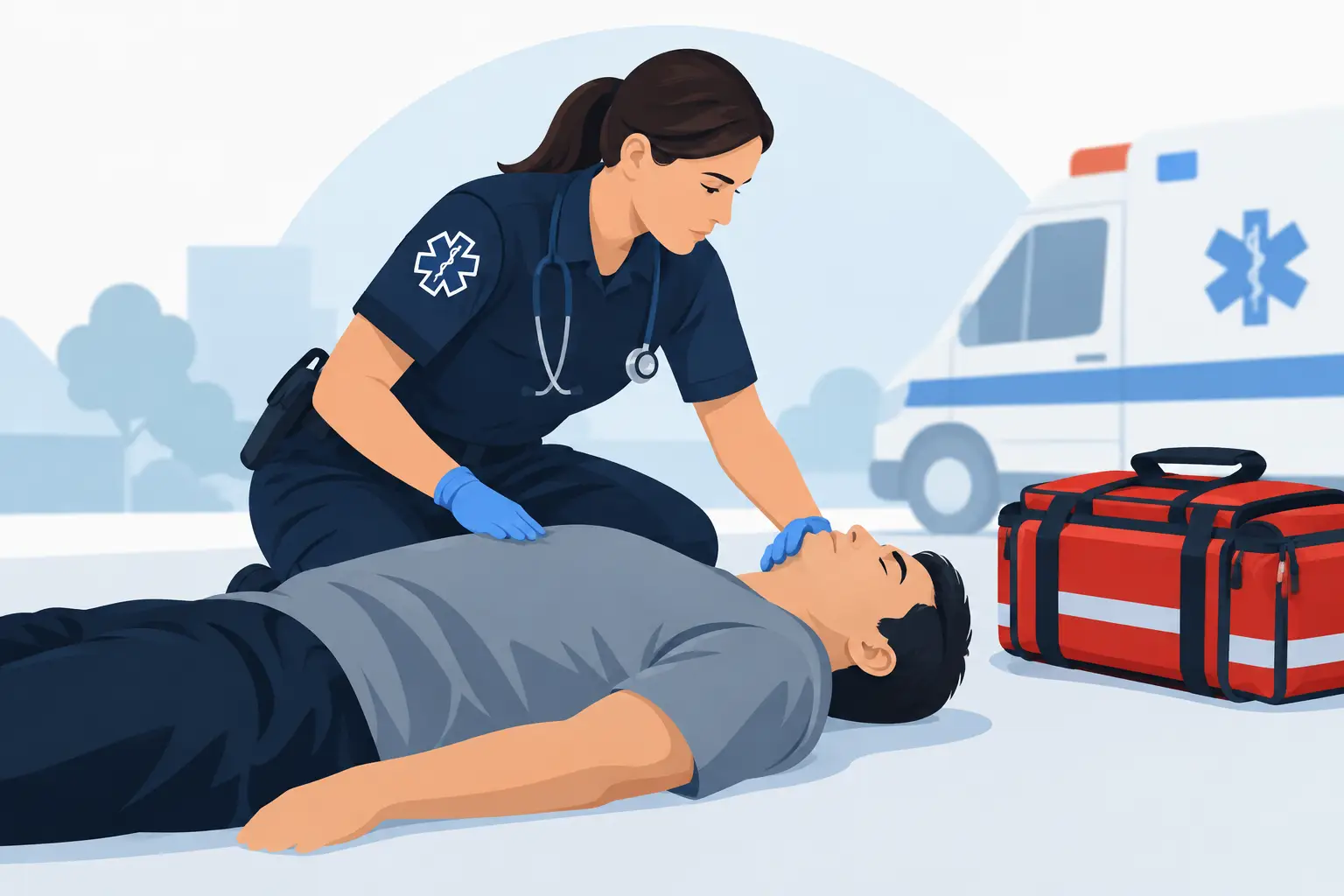
A trauma scenario can look straightforward until one detail changes the priority: a compromised airway, an unrecognised catastrophic bleed, or a patient whose condition deteriorates during transport. DCAS paramedic trauma assessment questions are designed to test whether you can identify that priority quickly, apply a safe sequence, and choose the most appropriate next action under pressure.
For a licensing-style multiple-choice exam, knowing isolated facts is not enough. You need to recognise the pattern in a short clinical vignette, filter out information that is not immediately relevant, and select the answer that protects the patient first. Your preparation should reflect that reality.
What DCAS paramedic trauma assessment questions test
Trauma questions usually assess clinical judgement rather than simple recall. A question may describe a road traffic collision, fall, penetrating injury, crush incident, burn, or multiple-casualty scene. The patient may be conscious at first, then become confused, pale, tachycardic, or increasingly short of breath. Your task is to decide what matters now.
The core principle is prioritisation. In most scenarios, the best answer follows a structured primary assessment and addresses an immediate life threat before moving to a less urgent concern. A painful fracture may be obvious, for example, but uncontrolled external haemorrhage, airway obstruction, or inadequate ventilation takes precedence.
Expect questions to examine your understanding of scene safety, mechanism of injury, rapid primary assessment, haemorrhage control, spinal motion restriction, shock recognition, reassessment, communication, and transport decisions. The exact wording can vary, but the clinical logic should stay consistent.
Start with the trauma sequence, not the final diagnosis
Candidates can lose marks by trying to name the injury before they have managed the priorities. If a patient has chest trauma, low oxygen saturation and increased work of breathing, the exam may not be asking you to make a definitive diagnosis. It may be asking which intervention or assessment comes first.
Read the scenario in order. First, consider whether the scene is safe and whether additional resources are required. Then look for catastrophic external bleeding. Continue with airway, breathing, circulation, neurological status, and exposure as appropriate to the clinical context and local protocol. The order matters because it prevents you from becoming distracted by visible but non-immediate injuries.
A useful question to ask yourself is: what could kill this patient in the next few minutes if I do nothing? The answer is often closer to the correct option than the most detailed or technically impressive choice.
Recognising distractors in multiple-choice scenarios
Exam distractors often sound reasonable. An option may describe a useful treatment, but it may be premature. Another may be correct in a different patient presentation but unsafe for the scenario given.
For example, a patient with severe limb bleeding, cool skin and altered mental status needs rapid haemorrhage management and circulatory assessment. Choosing a detailed secondary examination before controlling the bleed is not the best next step. Likewise, administering an intervention without first managing a threatened airway may be clinically out of sequence.
Pay close attention to words such as “first,” “most appropriate,” “priority,” “immediate,” and “next.” These words tell you that the question is testing sequence, not whether every option has some clinical value.
High-yield trauma areas to practise
You should be able to work through common trauma presentations confidently and explain why one action comes before another. The following areas deserve focused practice because they frequently appear in scenario-based assessment.
Catastrophic haemorrhage and shock
Trauma patients can deteriorate quickly from blood loss, including when external bleeding is not dramatic at first glance. Practise identifying severe haemorrhage, selecting appropriate bleeding-control measures, and recognising signs consistent with poor perfusion or worsening shock.
Questions may ask when direct pressure is appropriate, when escalation is required, or which finding suggests that a patient is becoming unstable. Do not treat normal-looking initial observations as reassurance if the mechanism and clinical signs point toward significant injury. Trend and reassessment matter.
Airway and breathing problems
Airway questions may involve facial trauma, reduced consciousness, vomit, blood, or an inability to maintain a patent airway. Breathing scenarios may include chest injury, abnormal respiratory effort, unequal chest movement, hypoxia, or worsening distress.
Focus on what you can see and hear in the stem. A noisy airway, inability to speak normally, cyanosis, or reduced chest expansion should change your priorities. When several options are plausible, choose the one that addresses the most immediate airway or ventilatory threat while remaining within a paramedic’s scope and protocol.
Spinal assessment and motion restriction
Spinal trauma questions often test balanced decision-making. Mechanism alone is not the whole answer. Consider the patient’s symptoms, neurological findings, level of consciousness, distracting injuries, and the ability to assess them reliably.
Avoid thinking of spinal care as a single automatic action for every trauma patient. The exam may test whether you can recognise the need for appropriate spinal motion restriction while still managing airway, breathing and haemorrhage first. A rigid sequence is useful, but it must not delay treatment of an immediate life threat.
Head injury and neurological change
A patient who becomes confused, drowsy, agitated, or less responsive requires close attention. Trauma questions may test how you assess consciousness, recognise a deterioration trend, protect the airway when needed, and communicate clear findings during handover.
Do not rely on one neurological observation alone. Compare changes over time, consider oxygenation and perfusion, and reassess after interventions. In exam questions, a declining level of consciousness is usually a signal to act with urgency rather than continue a routine secondary survey.
Multiple patients and scene priorities
Some questions move beyond one patient and ask how you would manage competing needs. In these cases, safety, rapid triage, available resources, and communication become central.
The most severely injured patient is not always the person making the most noise. A walking patient with pain may be distressed but stable, while a quiet patient with poor respiratory effort requires immediate attention. Read the clinical indicators, not just the emotional detail in the scenario.
How to answer scenario questions accurately
Use a consistent method every time you practise. First, identify the question being asked. Is it looking for the first intervention, the most likely concern, the next assessment, or the safest transport decision? Then pull out the two or three findings that determine urgency.
Next, mentally run the primary survey. If one answer manages a life-threatening problem and another begins a non-urgent task, the priority option is usually stronger. Finally, check whether the answer is realistic for the setting described. An option that ignores scene safety, delays transfer without reason, or assumes information you have not been given should make you cautious.
It also helps to explain your answer aloud after each practice question. If you cannot state why an option is correct in one or two clear sentences, you may be relying on guesswork. Good exam readiness means understanding the clinical decision, not memorising a letter choice.
Build practice around weak points
Do not revise trauma as one large subject. Separate it into focused sessions: haemorrhage and shock one day, chest trauma and breathing the next, then head and spinal considerations. Short, repeated sessions make it easier to identify where your clinical sequence breaks down.
Timed practice is equally useful. Under time pressure, many candidates either rush past key words or overthink every option. Aim to read deliberately, decide on the priority, and move on. Review incorrect answers afterwards, especially when your chosen option was clinically useful but not the best immediate action.
A targeted TestReady UAE practice pack can help you rehearse original, exam-style questions under timed conditions, then review answer explanations during the 30-day access period. Use the explanations to identify the missed priority, not simply to record the correct answer.
Walk into your assessment with a repeatable habit: assess the threat, treat the priority, reassess the patient, and choose the answer that reflects safe clinical judgement. That habit will serve you on test day and when a real trauma call demands calm, structured action.